
Choose Fitbod If
You want AI-generated workouts.
Fitbod is a good choice if you want exercise suggestions, guided sessions, recovery-based planning, and an app that actively builds workouts for you.
Via Fortis vs Fitbod
Workout Tracker Comparison
Fitbod is built to generate the session. Via Fortis is built for lifters who write their own training and want clearer feedback from the work they log.
Feature Comparison
| Compare | Best for self-programmingVia Fortis | Fitbod |
|---|---|---|
| Best for | Self-programmed lifters who want private feedback on the training they choose. | Lifters who want an app to generate workouts from goals, equipment, recovery, and history. |
| Core job | Log fast, then review muscle coverage, weekly balance, lift progress, and Strength Momentum. | Generate personalized workouts and suggest exercises, sets, reps, and loads. |
| Programming fit | Keeps your plan yours while surfacing patterns, gaps, and lift suggestions from your own data. | Takes a more active role in deciding the workout, which can be helpful if you want planning help. |
| Experienced lifters | Works well when you already have a split, preferred movements, or long-term progression in mind. | Can feel less aligned for lifters following strict periodization, fixed exercise selection, or specific progression rules. |
| Training feedback | Body Map, Weekly Balance, Lift Progress, PRs, e1RM, workout history, and Strength Momentum show both strength trends and training coverage. | Recovery, progress charts, exercise history, and AI-adjusted recommendations help guide the next generated session. |
| When it can miss | Best if you are comfortable choosing or adjusting your own training. | Some lifters report that generated workouts can feel repetitive, oddly weighted, or inconsistent with their preferences. |
| Free and paid use | Core logging tools, Weekly Balance, Body Map windows, Lift Progress, basic goals, and starter presets are free. | Fitbod's free access is limited, and its core AI-planned workout experience sits behind a paid membership. |
Why Via Fortis
Fitbod is useful when you want the app to decide what comes next. Via Fortis is different. It assumes you want to stay in control of your training, then gives you better feedback from the work you actually logged.
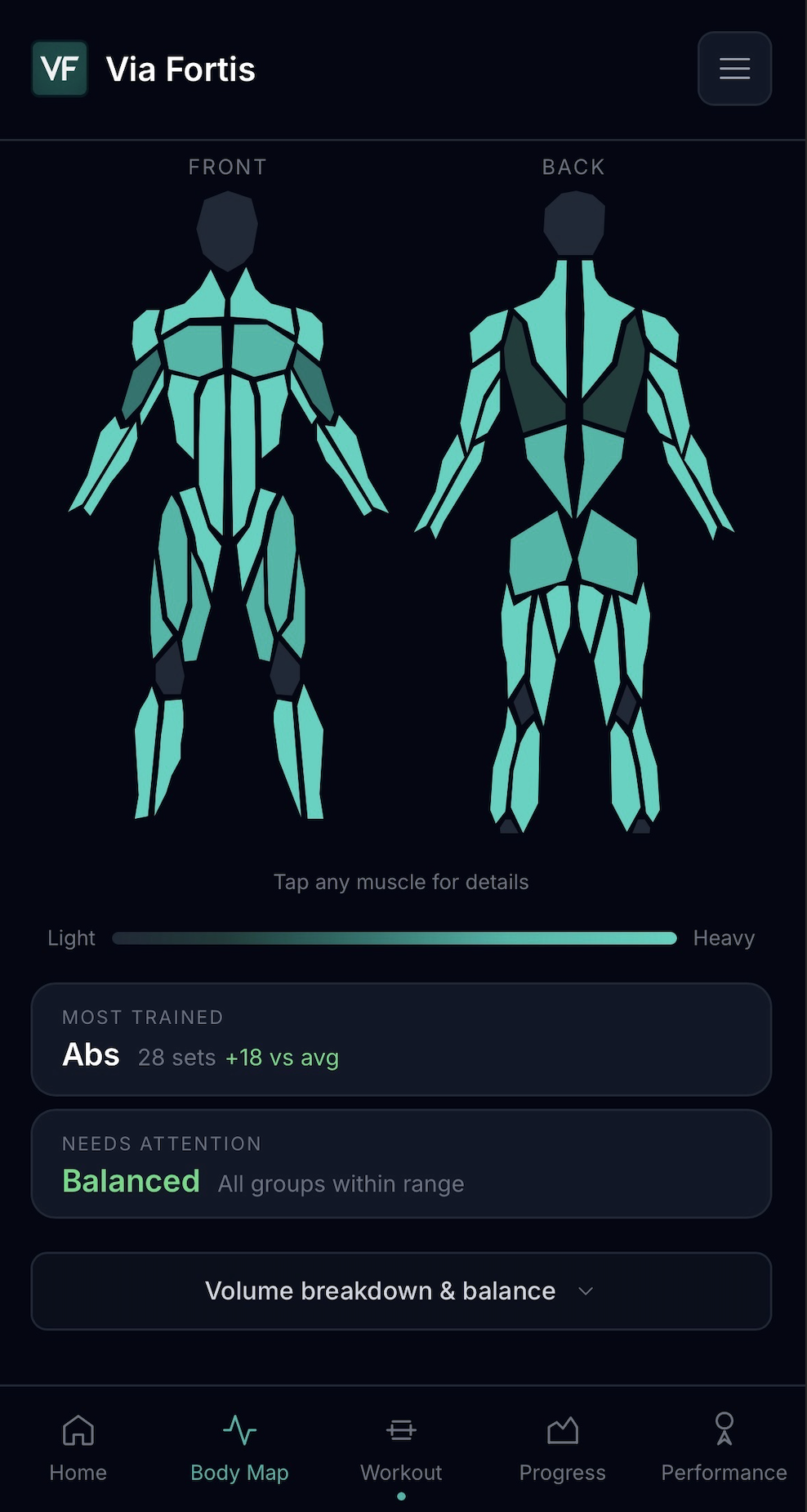
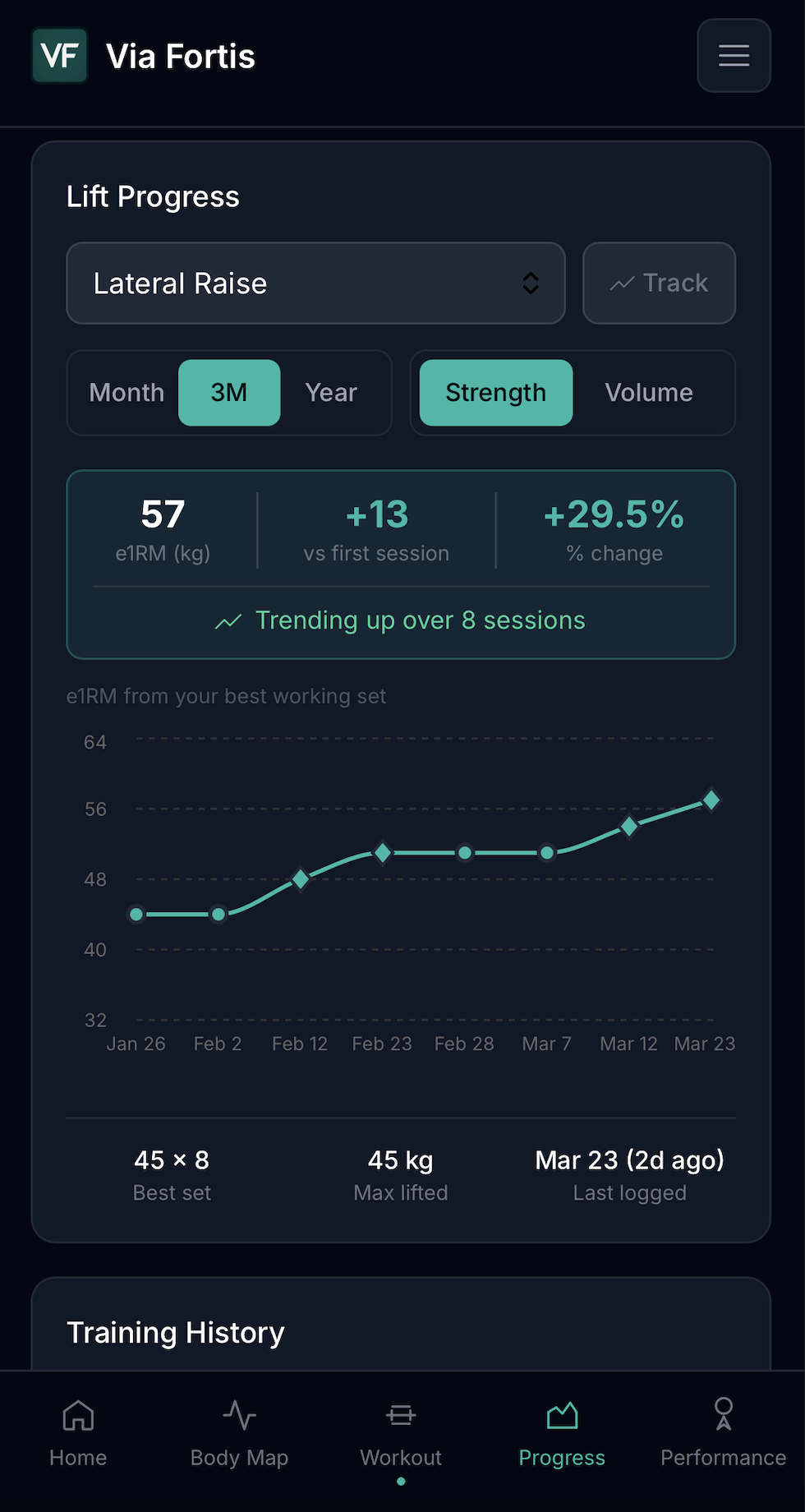
Body Map shows what muscles your training touched. Weekly Balance shows whether the week is skewed. Lift Progress and Strength Momentum show whether specific lifts are moving.
Choose Fitbod If
Fitbod is a good choice if you want exercise suggestions, guided sessions, recovery-based planning, and an app that actively builds workouts for you.
Choose Via Fortis If
Via Fortis is the better fit if you already train consistently, write your own workouts, and want your log to show muscle coverage, balance, and strength progress without handing over the plan.
Pricing and Availability
Core logging tools, Weekly Balance, Body Map windows, Lift Progress, basic goals, and a starter set of presets.
Longer Body Map windows, deeper insights, and more presets.
Fitbod's free tier is more of a preview, and the full AI-planned workout experience requires a paid membership that may be a bigger commitment for some lifters.
Pricing, trials, and eligibility are always shown in the App Store and may vary by region.
Download Via Fortis on iPhone, or try the free training audit first to preview muscle coverage and movement balance from your current program, typical training week, or recent workouts.