

What Strong does well
Visually straightforward logging, custom routines, rest timers, exercise history, and classic progress charts.
Via Fortis vs Strong
Workout Tracker Comparison
Strong is a fast, established gym log. Via Fortis is for lifters who want the log to reveal coverage, balance, and progress.
If your current tracker tells you what you did but not what your training is becoming, Via Fortis is the more focused choice.
The Short Version
Visually straightforward logging, custom routines, rest timers, exercise history, and classic progress charts.
The free tier is tighter, and Strong shows the history while reading the pattern is mostly left to you.
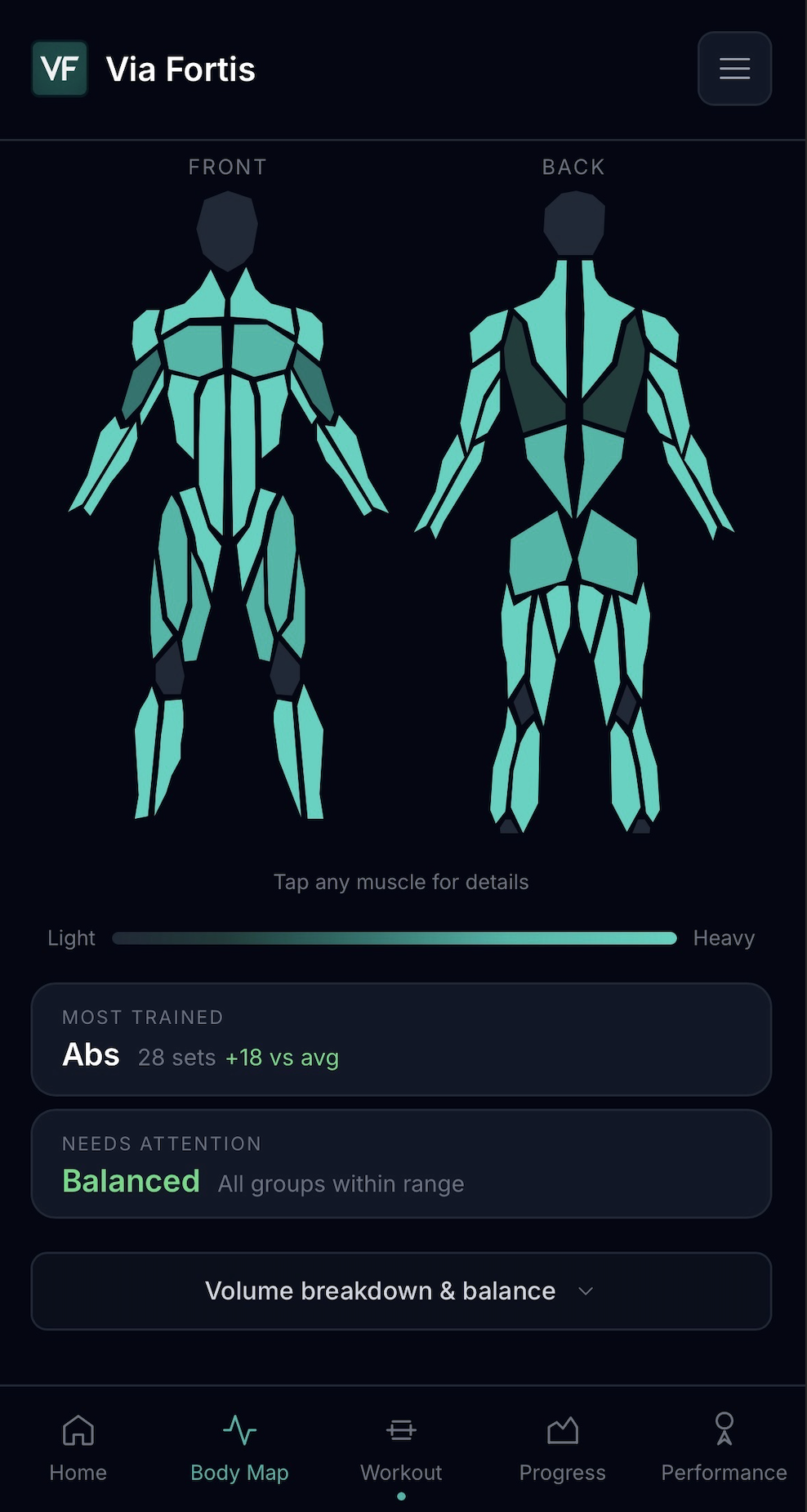
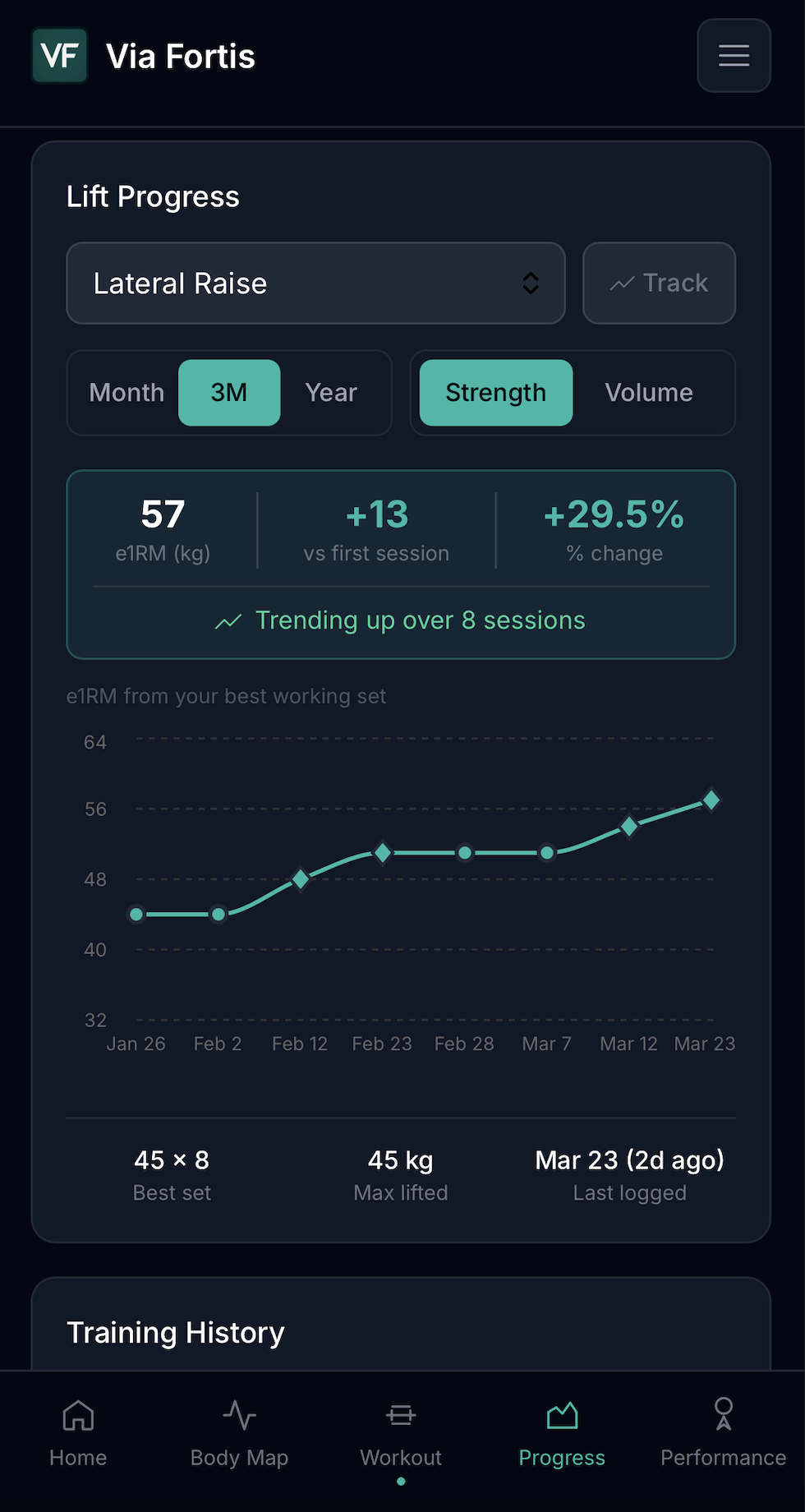
Via Fortis matches the core logging workflow, then adds Body Map, Weekly Balance, Lift Progress, and Strength Momentum to show what your training is actually becoming.
Feature Comparison
| Compare | Best for feedbackVia Fortis | Strong |
|---|---|---|
| Best for | Self-programmed lifters who want their log to reveal muscle coverage, balance, and progress. | Lifters who mainly want a familiar digital notebook for recording workouts. |
| Core logging | Fast set logging with custom routines, rest timers with haptics, exercise history, presets, quick starts, goals, and workout history. | Visually straightforward set logging with custom routines, rest timers, exercise history, and a familiar exercise library. |
| Free tier | Core logging, Weekly Balance, Body Map windows, Lift Progress, basic goals, and starter presets are free. | Free logging is available, but some routine and Pro features sit behind subscription tiers. |
| Progress review | Lift Progress, PRs, e1RM, workout history, Strength Momentum, Body Map, and Weekly Balance show both strength trends and training coverage. | Charts, personal records, estimated 1RM, body measurements, and history help review logged performance. |
| Gap detection | Muscle coverage and weekly movement balance are core views, so missed areas are easier to spot. | Useful history and charts, but gaps require more manual interpretation from the lifter. |
| Your training plan | Keeps your programming yours while surfacing patterns, gaps, and lift suggestions from your own data. | Keeps routines close at hand for lifters who already know what they want to log. |
Why Via Fortis
Many logging apps do the first part well: capture the workout. Via Fortis is built for the next question: did that work create balanced training, better coverage, and visible strength progress?
That is why the core views are visual. Body Map shows what muscles your training touched. Weekly Balance shows whether the week is skewed. Lift Progress shows whether specific lifts are moving.
Choose Strong If
Strong is a good choice if you prioritize visually straightforward logging, custom routines, rest timers, exercise history, and classic progress charts.
Choose Via Fortis If
Via Fortis is the better fit if you want muscle coverage, weekly balance, lift trends, and simple feedback that helps you see what your own training is actually doing.
Pricing and Availability
Core logging tools, Weekly Balance, Body Map windows, Lift Progress, basic goals, and a starter set of presets.
Longer Body Map windows, deeper insights, and more presets.
Free workout logging, with some routine and Pro features reserved for subscription tiers.
Pricing, trials, and eligibility are always shown in the App Store and may vary by region.
Download Via Fortis on iPhone, or try the free training audit first to preview muscle coverage and movement balance from your current program, typical training week, or recent workouts.