
Rear delts and upper back
Rows help, but rear delts and upper back may still be mostly indirect if your pull work is narrow or lat-dominant.
Find Missing Muscles
Muscle Coverage Audit
Your exercise list is not the same as muscle coverage.
Common missed areas include rear delts, calves, hamstrings, core, side delts, and upper back. But the best answer comes from your recent lifts, not a generic list.
Direct Answer
Most lifters can name their workouts, but it is harder to remember which muscles those workouts reached. Rows may train lats and upper back while also touching rear delts and biceps. Squats may cover quads and glutes while leaving hinge work light. Pressing may feel productive while side delts or rear delts still need direct attention.
The useful question is not just what exercises you did. It is what those exercises covered over the last week or two.
Common Gaps
Use these as common blind spots to check, then let your recent training confirm what actually needs attention.
Rows help, but rear delts and upper back may still be mostly indirect if your pull work is narrow or lat-dominant.
These areas are easy to assume are covered by bigger lifts, but many programs barely train them directly.
Leg days can become squat-heavy. If hinge and trunk work do not have a clear slot, they often drift behind.
Upper day, lower day, push day, and pull day are labels. The real coverage depends on the exercises, sets, and swaps that happened inside those sessions.
A muscle can help during compound lifts and still be undercovered directly. That distinction is why mapped coverage is more useful than memory. It shows training work, not soreness or recovery status.
Example Muscle Audit
A busy upper-body week is not automatically complete.
Bench, incline press, pulldowns, cable rows, curls, and triceps work across two upper-body sessions.
Chest and lats are covered, arms are active, but side delts and rear delts are light compared with the rest of the week.
Add a direct delt slot, adjust row selection, or make upper-back work more intentional if that matches your goal.
Via Fortis Body Map
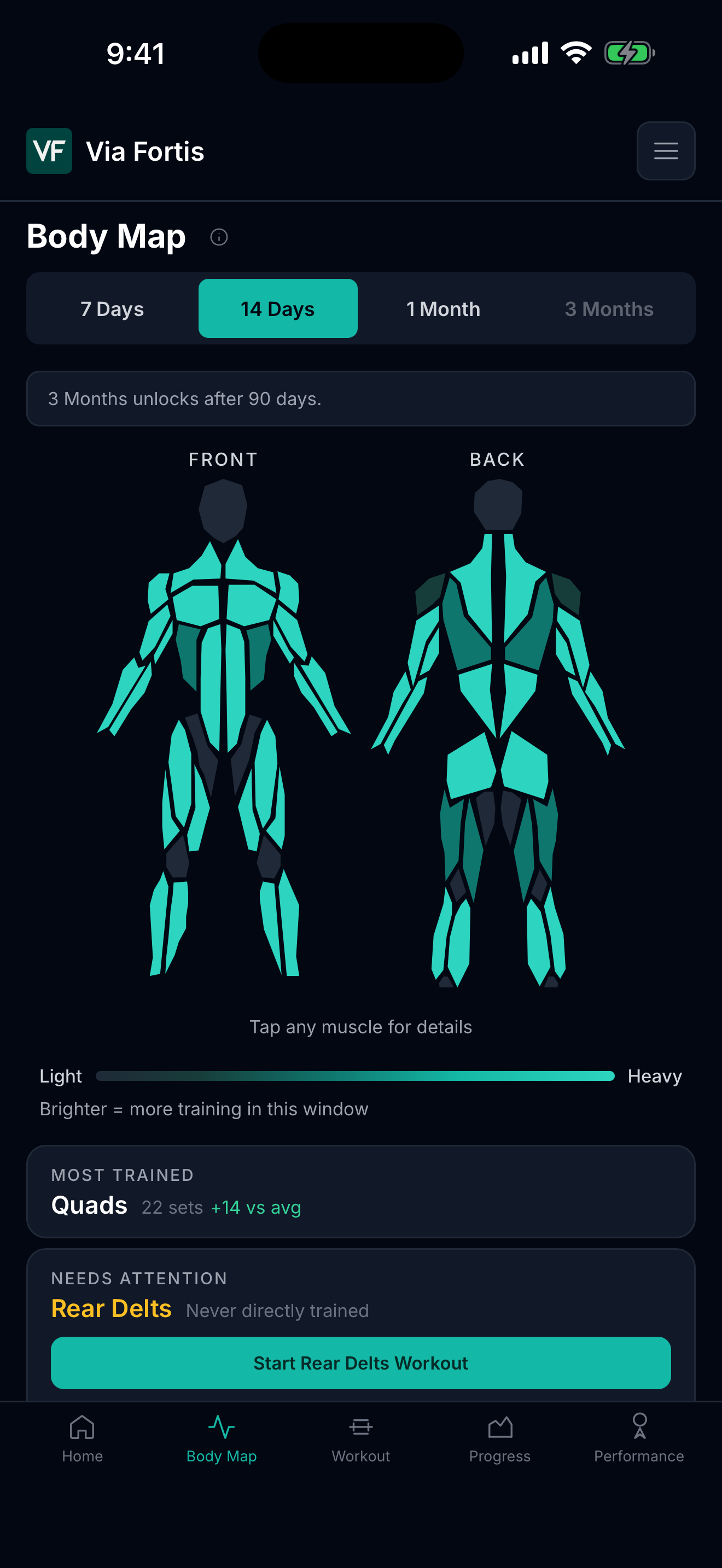
The free Training Audit maps the lifts you enter to muscle coverage, then shows which areas were trained heavily, lightly, or barely at all.
In the app, Body Map keeps that view updated as you log, so you can tell whether a missed muscle was a one-week blip or a recurring pattern.
FAQ
Common missed areas include rear delts, calves, hamstrings, core, side delts, and upper back. The right answer depends on your recent exercises, so your own workout log should decide.
Map the exercises in your current program, typical training week, or recent workouts to the muscles they train, then review which areas received direct, supporting, or no mapped work. The Via Fortis Training Audit previews this in your browser.
Yes. A split can look balanced by day name while exercise choices still leave some muscles undercovered, especially rear delts, calves, hamstrings, core, and smaller shoulder or upper-back areas.
No. Via Fortis shows mapped training work and coverage patterns, not recovery status, soreness, injury risk, or medical advice.
Run a private browser audit to preview muscle coverage, weekly balance, and training gaps from the lifts you enter.