
Push vs pull
Check whether pressing volume is crowding out rows, upper-back work, rear delts, and enough pulling variety.
PPL Balance Check
Push Pull Legs
PPL is a structure. Balance comes from the work inside it.
Check whether your recent push, pull, and leg sessions actually covered push, pull, squat, hinge, core, and the muscles that often fall through the cracks.
Direct Answer
PPL gives each major day a place, but the split name does not guarantee balanced training. Push volume can creep up. Pull days can become lat-heavy. Leg days can become squat-heavy. Hinge, core, calves, rear delts, and upper back can still be undercovered.
A useful PPL balance check starts from the lifts you actually logged, then reviews movement balance and muscle coverage across the recent week or two.
What To Check
The split gives you buckets. The logged lifts decide what those buckets actually trained. If you want the broader version, start with the guide to analyzing any workout split.
Check whether pressing volume is crowding out rows, upper-back work, rear delts, and enough pulling variety.
Check whether leg days include both squat and hinge patterns, not only quads and knee-dominant work.
Check whether core, calves, side delts, and rear delts have a reliable place instead of depending on leftovers.
Pulldowns and rows may cover lats well, but rear delts and upper back can stay light if your pull work is narrow, machine-heavy, or always the same angle.
Squats, leg press, lunges, and extensions can make leg day feel complete while hamstrings and hip-hinge work stay underrepresented.
Example PPL Audit
The plan can look complete while the recent work tells a sharper story.
Push, pull, legs, push across the week, with enough sessions to feel productive.
Push is strong, pull is decent, squat is covered, hinge is light, core is missing, and calves are barely touched because legs only showed up once.
Add a reliable hinge slot, pair core with legs or pull, and make calves or rear delts intentional if they matter to your goal.
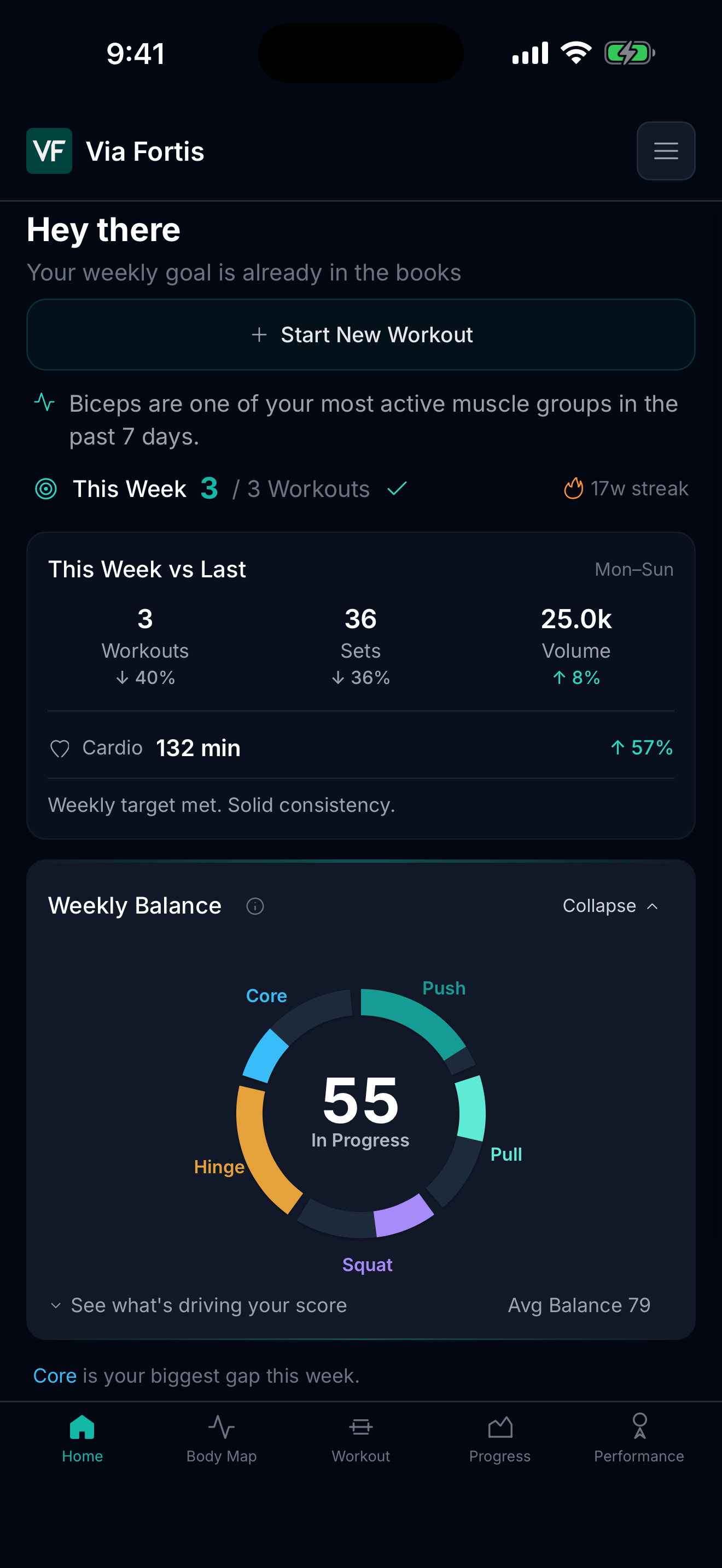
Via Fortis Weekly Balance
The free Training Audit maps your lifts into push, pull, squat, hinge, and core balance, then pairs that with muscle coverage from the Body Map.
That gives you a clearer view of whether the PPL structure is working as intended, or whether the same gaps keep slipping through.
PPL breaks fast when the same day gets skipped repeatedly. If you miss legs twice but always make push, your split may still be called PPL while the actual training pattern becomes upper-body biased.
You do not need every pillar to be equal every week. The point is to see whether a bias is part of the plan or just what happened.
FAQ
No. Push pull legs is a useful structure, but balance depends on the exercises and sets inside the split. Recent logged work should be checked for push, pull, squat, hinge, core, and muscle coverage.
Review your current program, typical training week, or recent workouts for push versus pull, squat versus hinge, core work, calves, rear delts, upper back, and overall muscle coverage. The Via Fortis Training Audit previews this in your browser.
PPL often misses or underemphasizes hinge work, core, calves, rear delts, and upper back if those areas do not have a reliable place in the week.
Not always. Some phases should be biased. The goal is to see whether the bias is intentional or whether the split has drifted without you noticing.
Run a private browser audit to preview movement balance, muscle coverage, and training gaps from your recent lifts.